
Pendleton welcomes the Vernacular Architecture Forum
Keen-eyed Pendletonians may notice a hundred or so folks with a professional interest in architecture touring around Pendleton this Thursday afternoon between 2 and 5. The group are participants in this year’s Vernacular Architecture Forum (VAF), the premier North American organization dedicated to the study and preservation of ordinary buildings and cultural landscapes.
Who are the Vernacular Architecture Forum, and why are they touring Pendleton? And what does Vernacular Architecture even mean?
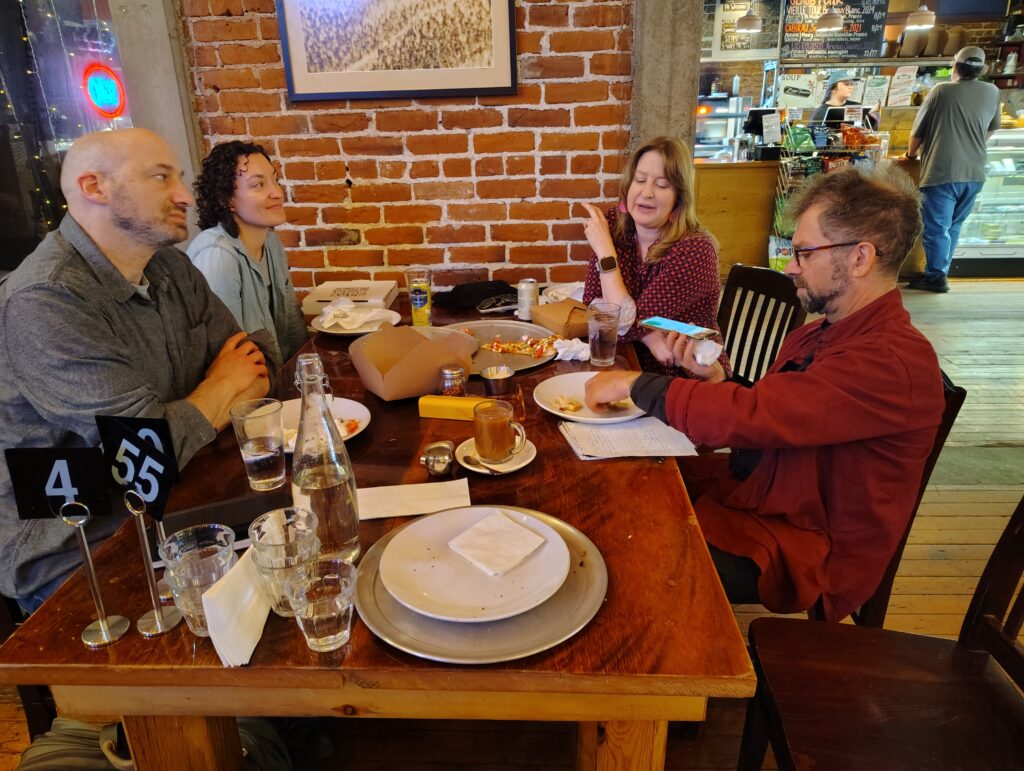
Eastern Oregon Living met up with conference coordinators Amanda Clark (“librarian by day and an architectural historian by night,”) WSU School of Design and Construction professor Phil Gruen and architectural historian and program associate for the Vernacular Architecture Forum Julia Griffith at Great Pacific to explore these and other architecture related questions.
Eastern Oregon Living: Could you define the term Vernacular Architecture?
Amanda Clark: In a nutshell, the term refers to architecture not designed by trained architects, which basically encompasses the majority of structures in which people live, work, shop, go bowling…whatever. So yeah, all the architecture that you might not think about as architecture could be defined as “vernacular.”
Eastern Oregon Living: Our house was originally designed by farmers, immigrants from Finland. Would that make it Vernacular Architecture?
Phil Gruen: Maybe…Vernacular Architecture is something of a state of mind. But from what we’ve heard, a lot of the homes in Pendleton have stories, and one of the things our organization wants to do is to celebrate the stories and traditions behind houses and other structures throughout the country. It’s as much about compelling stories as it is the more traditional way of looking at architecture.
Eastern Oregon Living: What’s the theme of this year’s conference and why did you decide to hold it in Eastern Oregon & Washington?
Amanda Clark: This year’s theme is “Atomic Space. Native Soil. Geologic Time.” So regionally speaking, Eastern Oregon and Washington makes perfect sense. Indigenous stories and voices have been a theme throughout all of our conference development, and our visit with the CTUIR tribe and Tamástslikt are undergirding the entire conference.
Phil Gruen: To piggyback on that, we are really inspired by the conscious design choices at Tamástslikt, the way that the structure itself and the land are connected, telling part of the story of the people who’ve called the area home for thousands of years. From the way the museum is built, low-lying, almost hugging the ground, to the way the road shifts from straight to curved lines as it approaches the museum. Without stating any intention, the design asks visitors to slow down and get out of the rectilinear way of thinking and into a more conscious, less rigid connection with the landscape. This is one of the reasons we’ve chosen to make Tamástslikt the first stop on the Pendleton leg of the tour.
Eastern Oregon Living: What does the rest of your Pendleton itinerary look like?

Amanda Clark: After leaving Tamástslikt we’ll be heading to Pendleton via Mission Road, talking a bit about the importance of ranching, and the sheep industry in general, in the early development of Pendleton. We will drive by Pendleton Woolen Mills and visit the Round-Up Grounds before heading downtown, where we’ll bring the group to the Pendleton Center for the Arts, continue with a series of guided and self guided tours of homes around Pendleton before winding up on Main Street and some of the neighboring streets.
Eastern Oregon Living: Does your group appreciate interaction?
Amanda Clark: Totally. We’re all about the stories behind the places, so it’s not just about bricks and dates, but the people who live and work in the buildings themselves.
Eastern Oregon Living: Pendleton is only one of the places in the area that your group will be exploring. Where else will you be in the region?
Julie Griffith: This year’s conference is based in Walla Walla, but we’re also going to be going to the Tri-Cities on Friday. There’s a lot of under-explored and rather complex history in the Tri-Cities, related to the Hanford nuclear reservation and World War II. We’re also going to be meeting with AACCES, the African-American community in East Pasco to share their stories.
Amanda Clark: That’s a great segue to another function of the VAF, which involves telling lesser known stories about communities and their place in local history. Exploring the history of the Chinese in Eastern Oregon and Washington, for example, beyond just the underground mythology.
Eastern Oregon Living: Before we close out, I want to bring the interview back to the architecture of Pendleton. I’ve heard the term polite houses and common houses used a few times. What would the distinction be?
Amanda Clark: In general, the term polite houses refers to homes that are ornate or otherwise eye-catching, and there are plenty of examples of homes like this all around Pendleton. But the term common houses really refers to homes that are less eye-catching, the sort of houses that people tend to drive by without a second glance. But here in Pendleton one of the things we’re going to celebrate are the more everyday houses, places less eye-catching but no less worthy of appreciation.
Phil Gruen: There’s a tendency to focus on fancy, ornate houses while disregarding less eye-catching places. But by doing this, we sort of neglect the stories of the people who’ve built their lives in any given place. So part of what we’re doing as an organization is trying to bring the focus back to the ordinary environment, to celebrate the beauty of vernacular architecture.
The Vernacular Architecture Forum is happening from May 27-30, and will be in Pendleton on Thursday May 28th. Visit their website for more details, or find ’em on Facebook!